
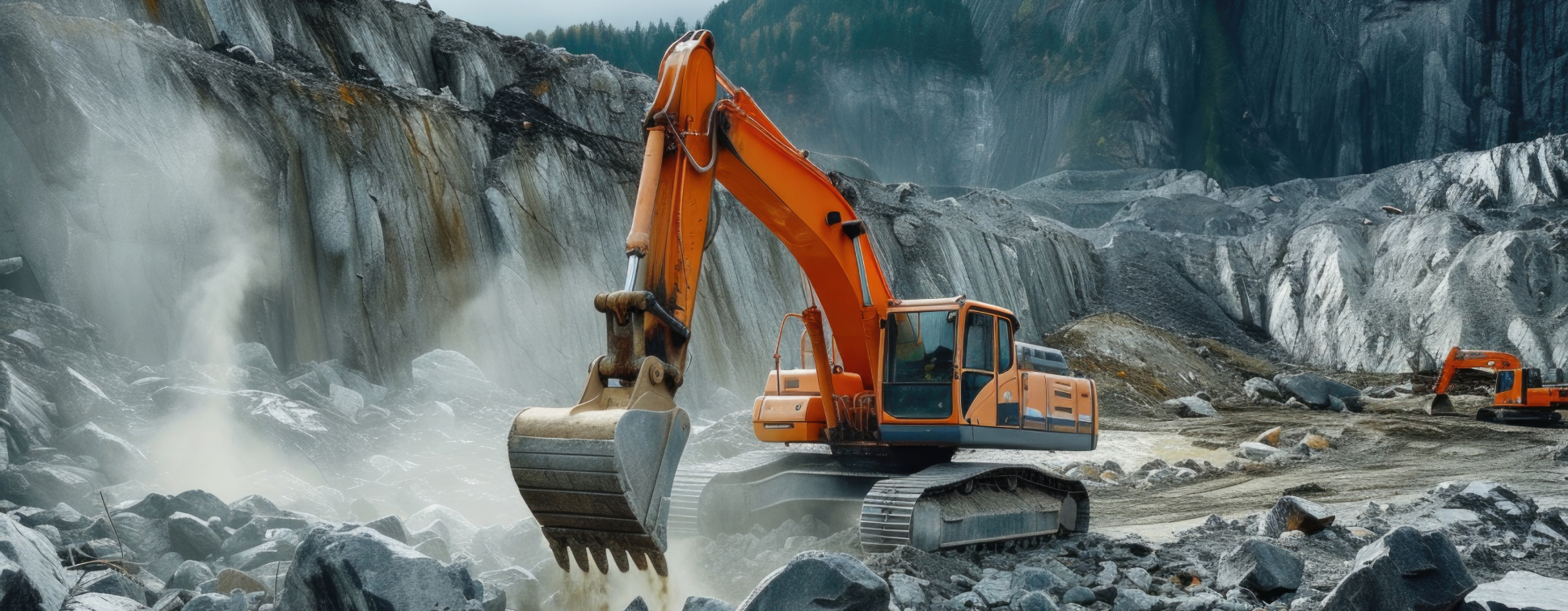
Maboumine Project
The Maboumine project aims to develop the Mabounié ore deposit in Gabon.

A world class polymetallic deposit with Niobium as the main element (2nd largest deposit in the world) but with the potential of other metals recovery such as rare earths, uranium, phosphates or scandium as by-products
The extensive development efforts carried out between 2000 and 2016 by various project owners has enabled the establishment of a sound knowledge of the deposit, to confirm the potential of the traditional route ( concentration and pyrometallurgy) to produce FeNb from the ore but also to successfully develop an innovative metallurgical process able to recover most of the value-metals embedded in the ore.
While the economic potential of the deposit was confirmed by some preliminary feasibility studies conducted between 2014 and 2016, additional work still remain to be completed in order to develop the industrialization aspects of the Project while reducing the associated risks and thus identifying the best development option for Maboumine
In 2024, Dusk, a subsidiary of New Energy Metals, an ADGM company, signed an agreement with the Government of Gabon to relaunch the development of the Maboumine project and immediately re-start project feasibility studies and activities.
The Development Plan
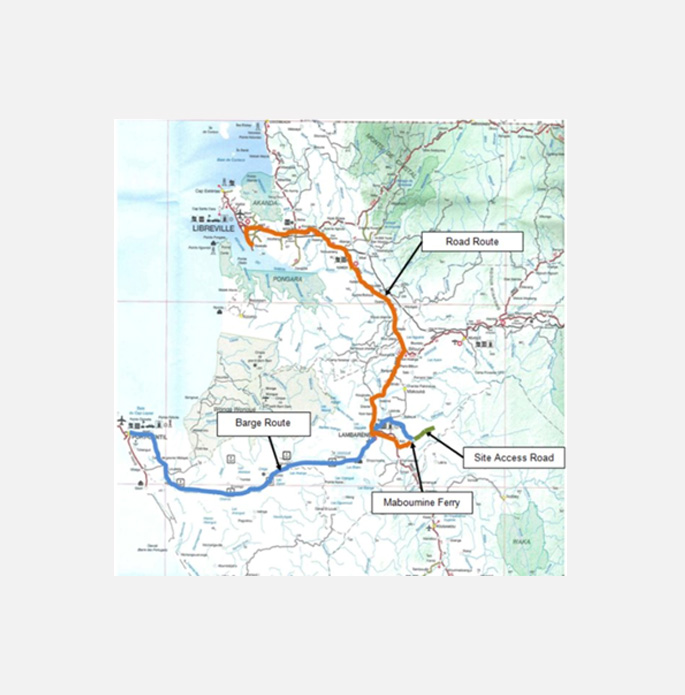
The Maboumine project involves developing the Mabounié polymetallic deposit located in the Middle Ogoué region, approximately 40 km from Lambaréné.
The industrial project includes the following industrial and logistics units:
An open-pit mine located in Mabounié producing 3 million tonnes of ore per year
A mineral processing plant, located near the mine, to remove impurities (iron, titanium) through magnetic and gravity separation, generating 1.5 million tonnes of concentrated ore.
A complex hydrometallurgical plant, located on a site to be validated by the Feasibility Study, which will allow for the extraction, separation, and purification of valuable elements (Nb, U, TR) to produce FeNb (feasibility aiming at 14,500 tpa Nb content), separated rare earths (feasibility aiming at 14,000 tpa), and potentially other valuable elements (uranium, phosphate, scandium).

Storage areas for residues from the hydrometallurgical process (5 Mt pa).
Port infrastructure at a Port to be validated in the Dusk Feasibility studies allowing the transport of reagents to the plant (2.5 Mt per year) and products.
As part of the project's strategy in 2025, NEM is studying various options to reduce project risks and costs. Among them, the optimal location for thehydrometallurgical plant, port and tailings dumps, as well as port related requirements.